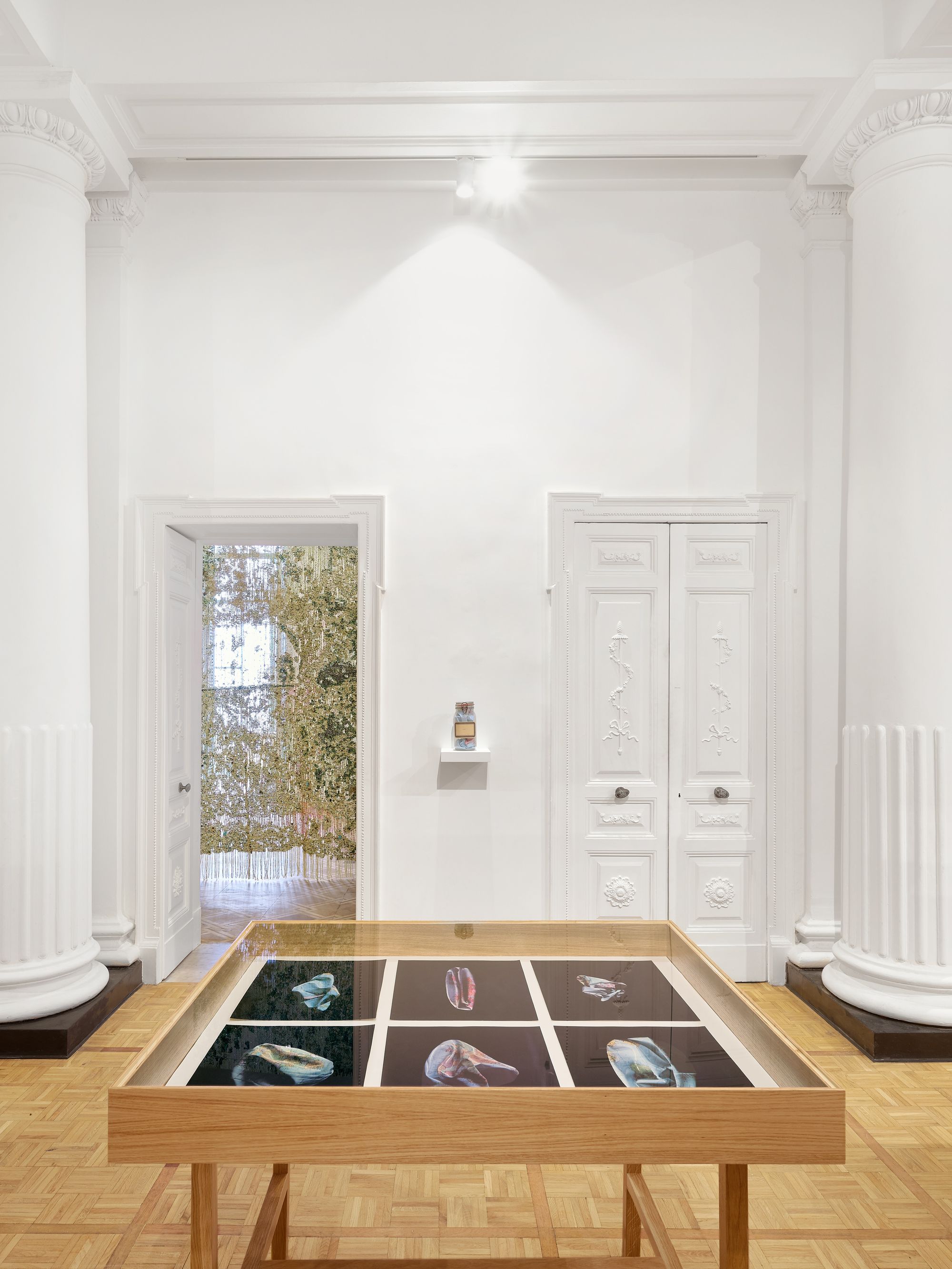
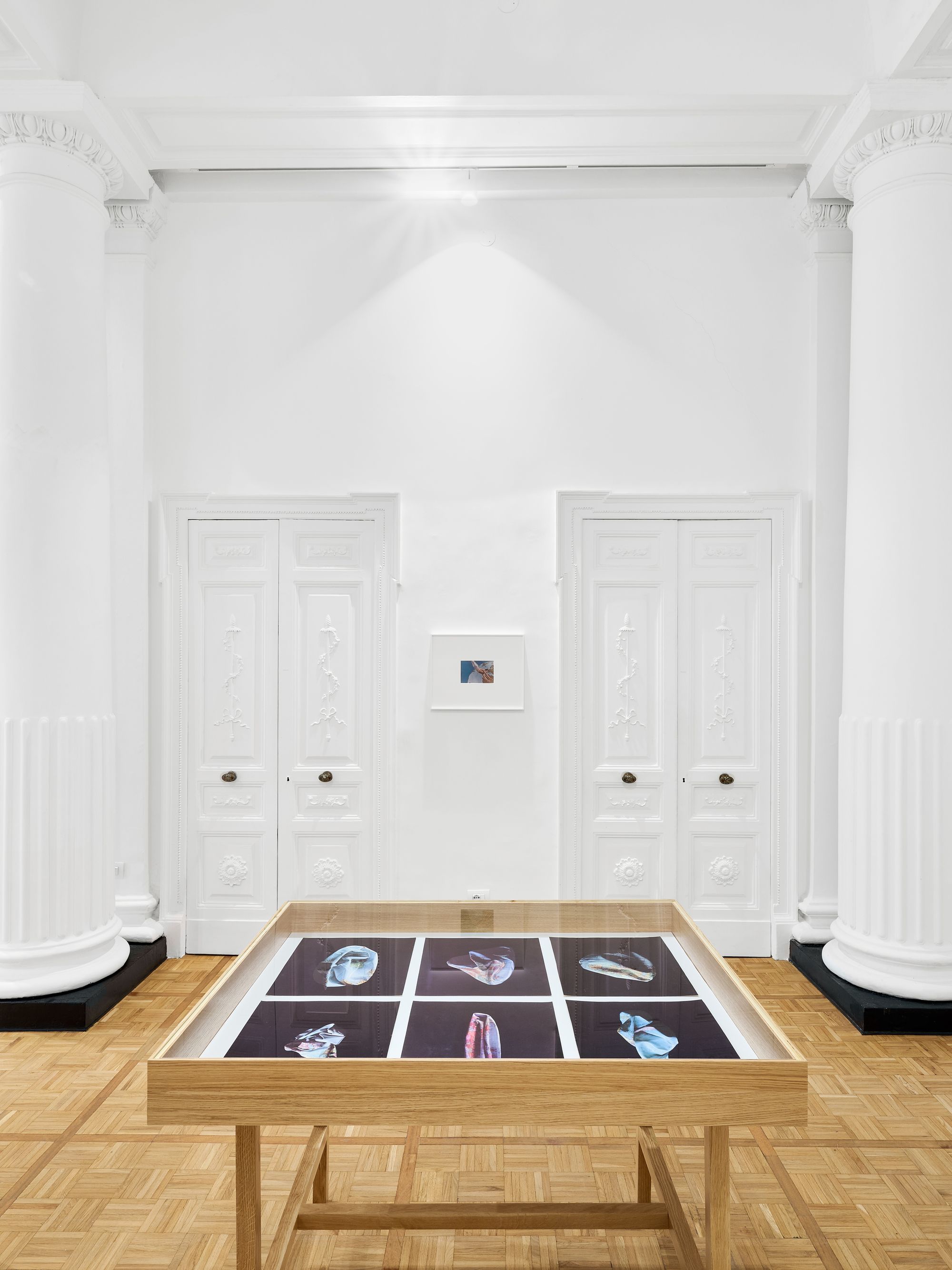
The drawings, paintings, weavings, sculptures and photographs in Atlante moveback and forth between the descriptive codes of the diagrammatic map and more intimate, imaginary cartographies. Whilst the artists in the exhibition are not indifferent to the allure of maps, they question its pretence at objectivity and its ties to a geo-politics of power, expansion and control. The starting point for the exhibition is two works made in Italy in the late 1960s and early 1970s, one by Claudio Parmiggiani, the other by Luigi Ghirri. Both works share the same title, Atlante, the Italian word for atlas. It’s a word rich with connotations, summoning up the vast expanse of the ocean, the lost city of Atlantis, and the heroic figure of Atlas condemned by Zeus to hold the weight of the world on his shoulders.
Over a decade from 1964 onwards, Claudio Parmiggiani made a number of sculptures and collages using globes which he later called his “geographic work.” (2) He cut one globe in half and combined it with a pair of shoes (Deserto, 1964), squeezed a cheap inflatable one into a bottling jar (Globo, 1968)and covered yet another one with black and white calfskin for the sculpture Pellemondo (1968).
Alongside these détournements, Parmiggiani turned his attention to the quintessential forms of continents familiar in maps from the 16th century onwards. In one work, he cut out the shapes of Asia, the Americas, Australia, Europe and the Antarctic, pinned them like butterflies on to graph paper, and arranged them in a glass display case (Collezione, 1966-71). The same continental silhouettes were then montaged onto the hides of cows standing in a field for a series of works titled Zoo Geografico (1968–1970).