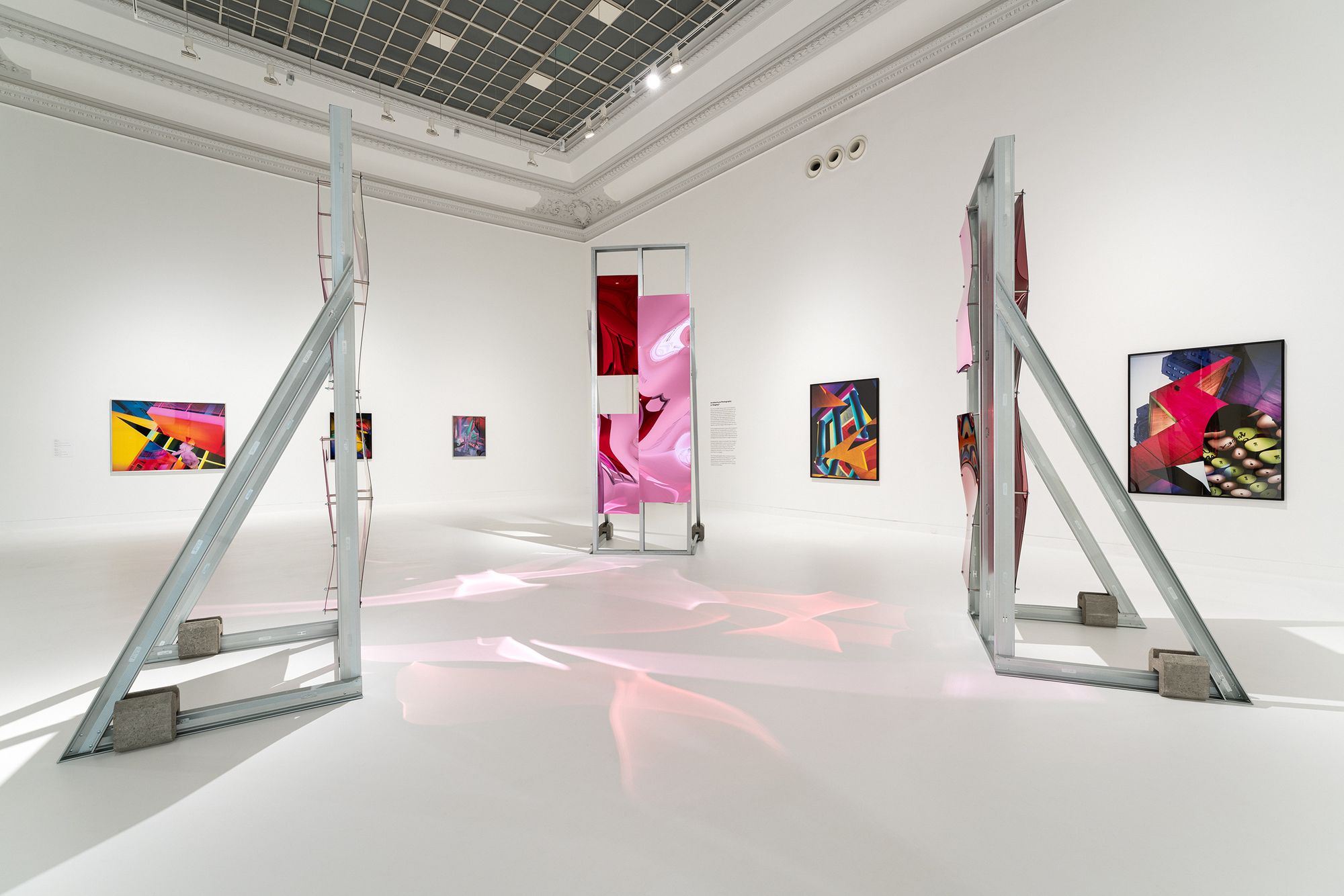
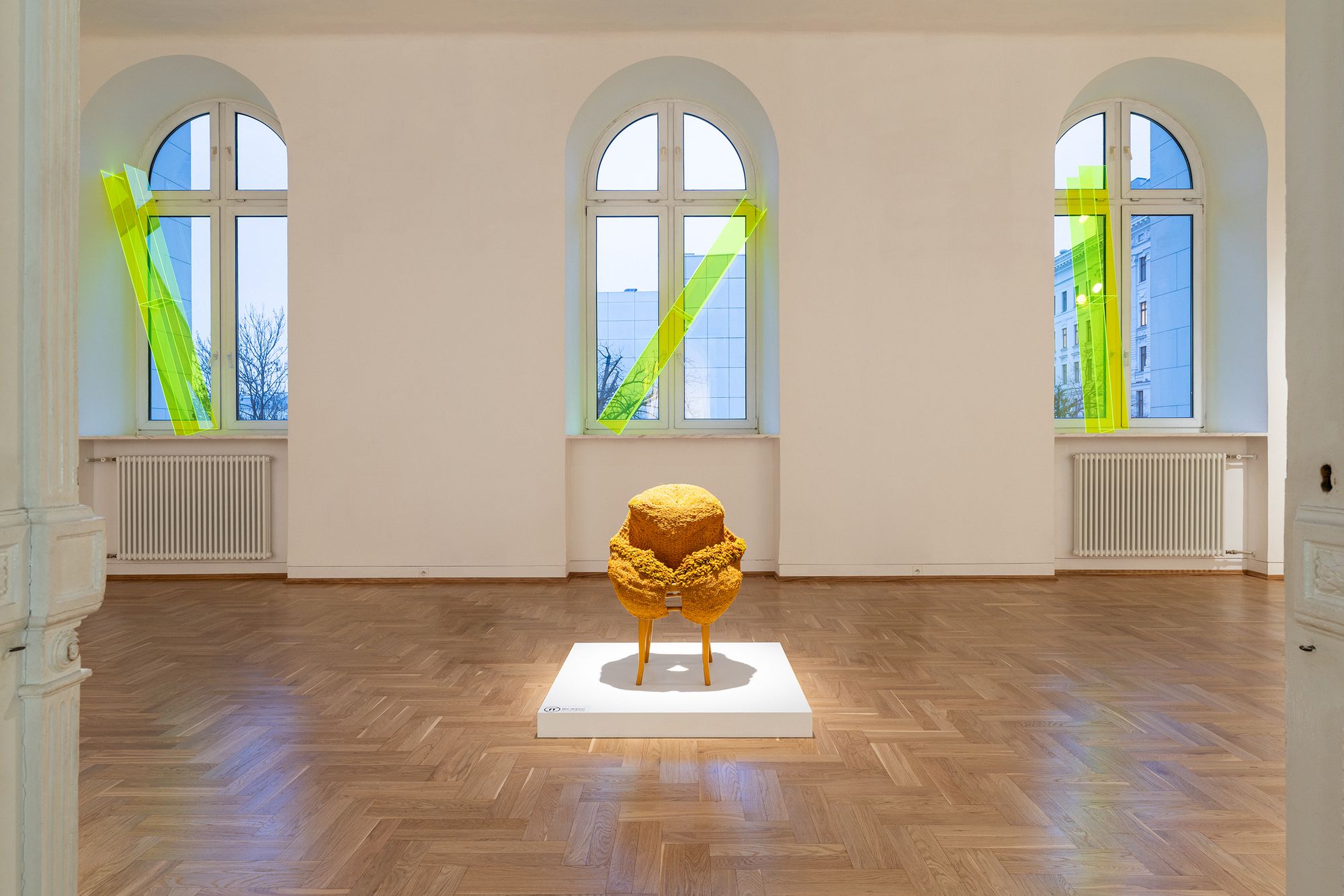
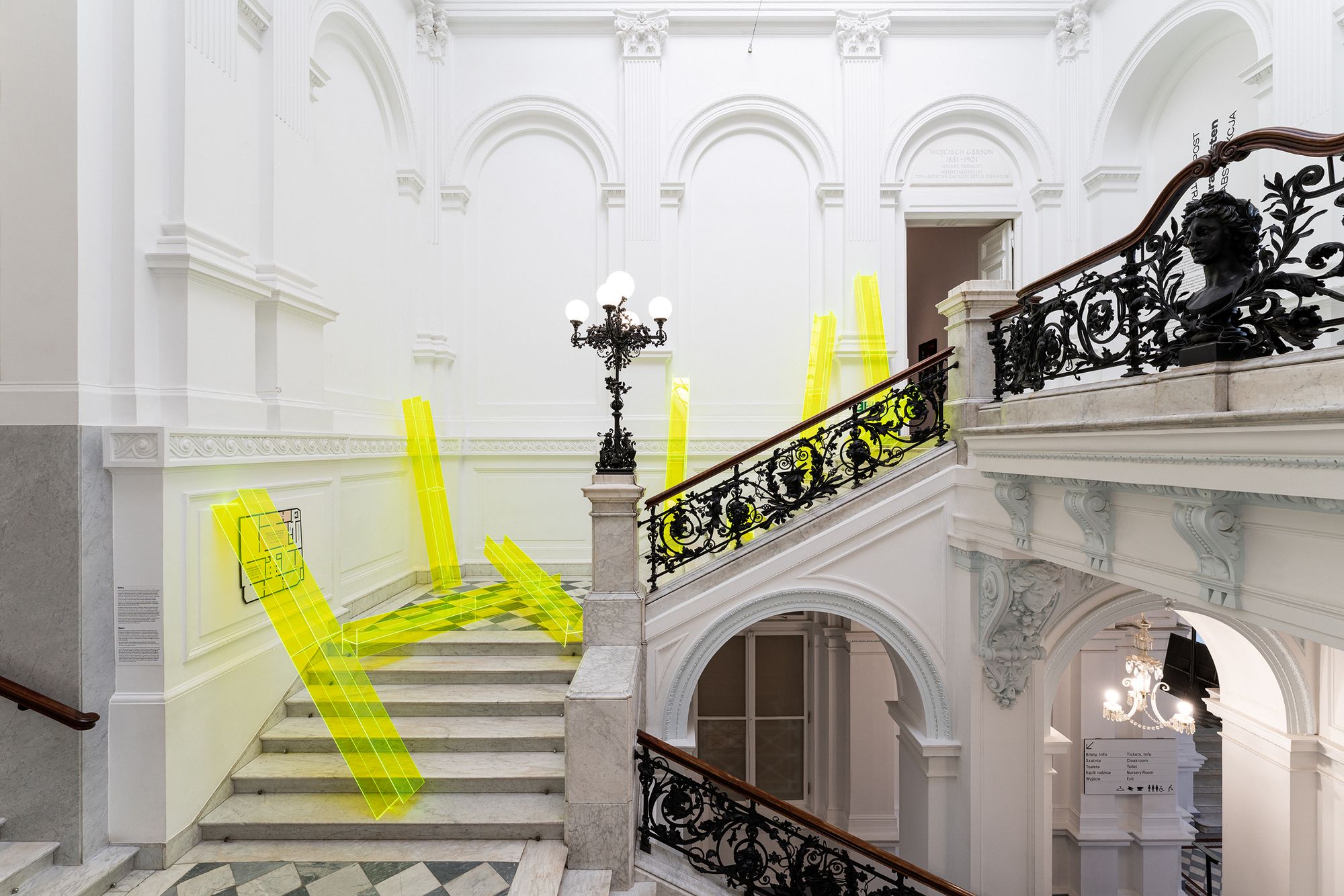
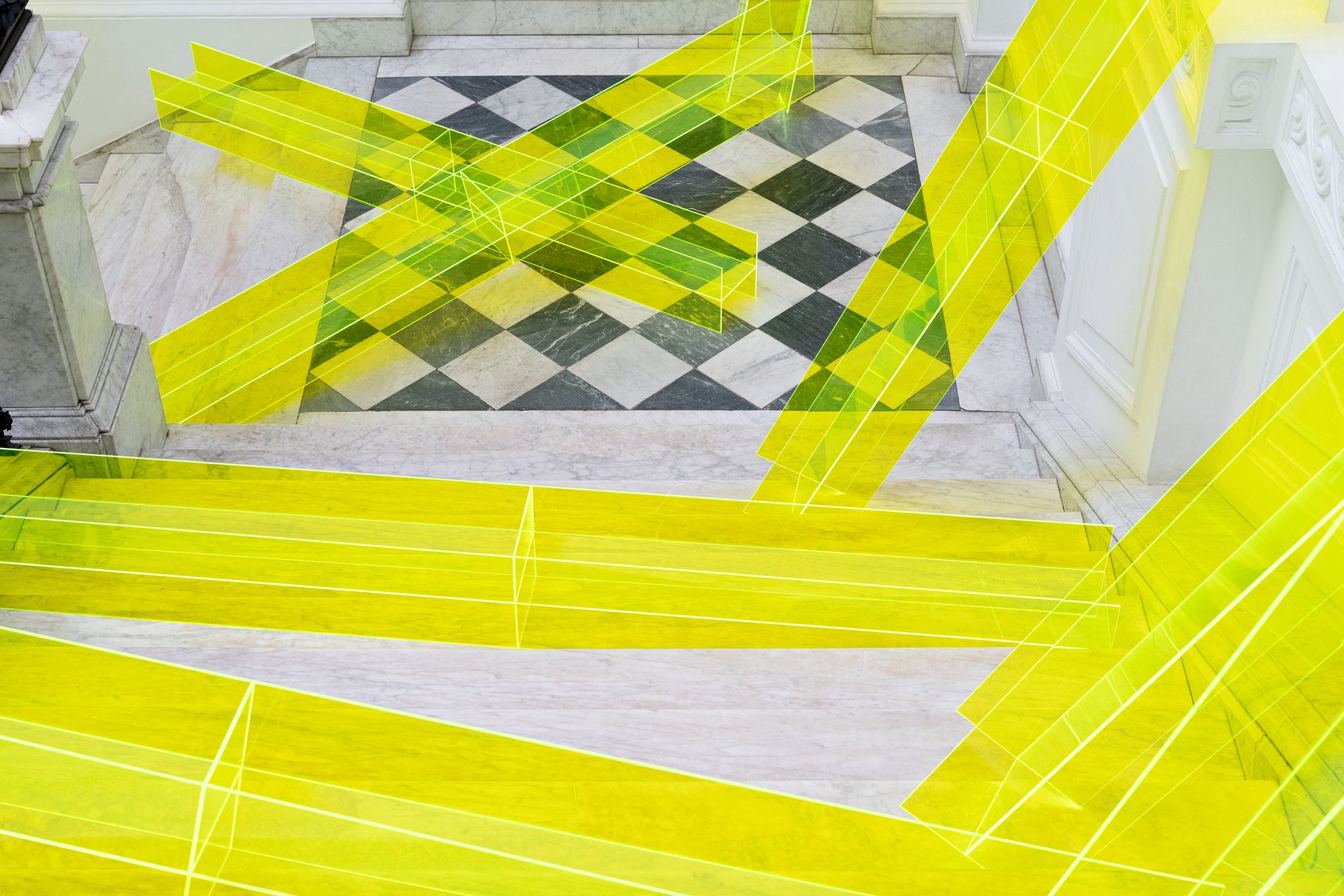
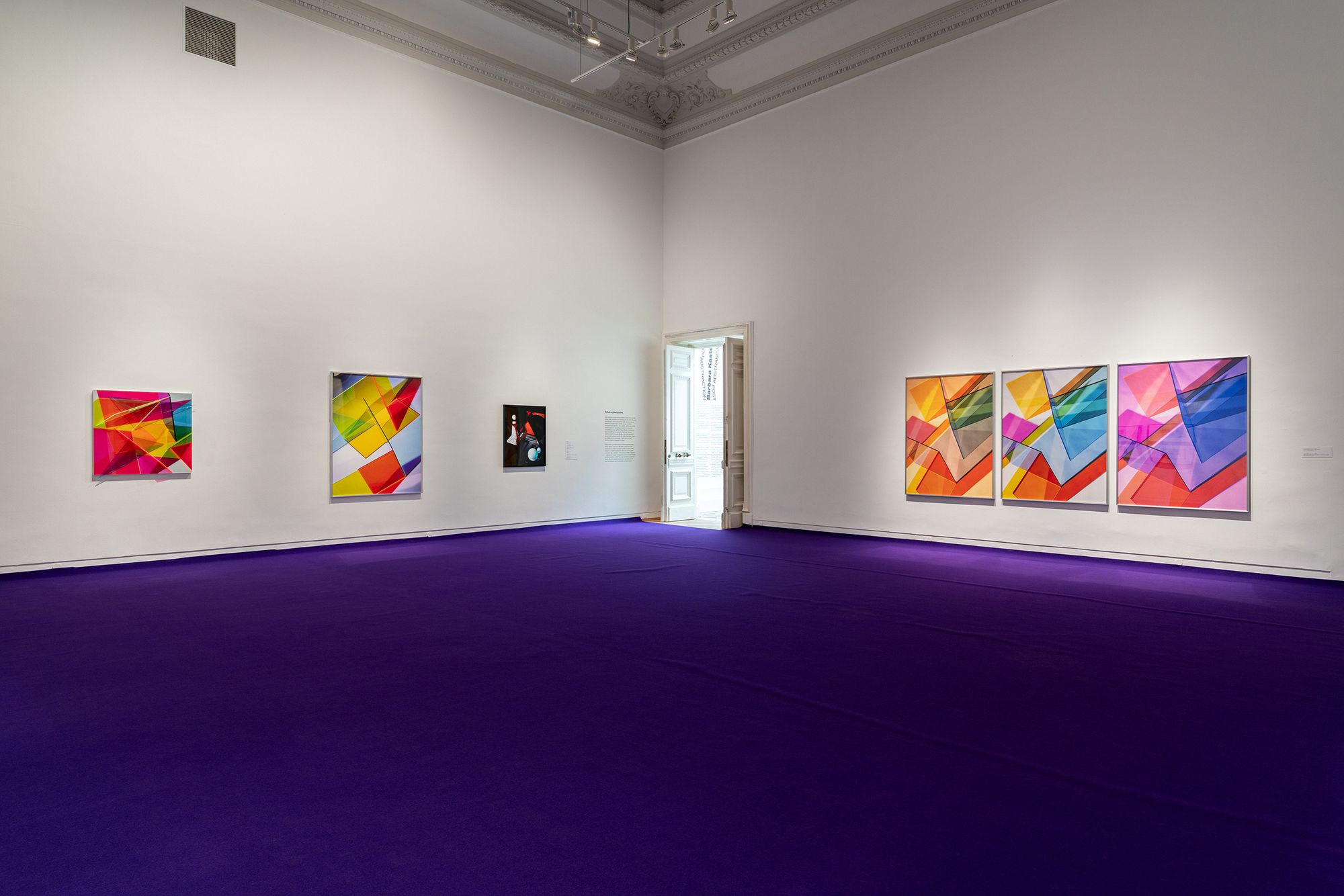
Barbara Kasten. Post-abstraction, the first such extensive exhibition of the American artist’s work in this part of Europe, marks a return to the place that helped her shape her artistic language many years ago. The exhibition involves a cross-sectional presentation of 100 works by Barbara Kasten, done in various media: photography, sculpture, and installation, complemented by the artist’s intervention in Zachęta’s stairway.
The exhibition brings back an important stage in the artist’s journey, one that is related to Poland. At the beginning of the 1970s, Kasten came to Poznań for a fellowship at the tapestry studio run by Magdalena Abakanowicz. Fascinated by the Polish school of artistic textiles, where yarn was seen as a sculpting medium, she used sisal to create a series of sculptures. Her works were then displayed at an individual exhibition at the Sculpture Gallery in Warsaw. And even though they were Kasten’s last sculptures, the experience of working in Poland proved to be a watershed moment for her. It reinforced her approach – which has defined her work ever since – where the image involves building relationships between an object, space, and light. The exposition at Zachęta shows how that line of thinking has evolved, from the early experiments of the 1970s to her current work.
Upon her return to the United Stated, the artist began to experiment with photography, from photograms and cyanotypes to staged Polaroids. Kasten does not photograph the existing reality. Her work does not revolve around the object, be it in the studio or in the context of architecture; instead, she focuses on the relationships between its components: how the light – often imbued with colour – deflects to transform the space. At the studio and out in the open air, the artist builds her own arrangements consisting of mirrors, steel rods, grids, colour filters, and simple geometrical solids. She uses light and reflection to construct images without digital intervention.
The title Post-abstraction refers to Kasten’s dialogue with the history of the avant-garde, constructivism, as well as modernist and post-modernist architecture. The artist does not replicate the language of abstraction; instead, she rewrites it, tests it, and confronts it with the experience of observation. She is interested in how the geometrical forms and light-based structures work today, in specific interiors, in relation to their surroundings and the spectators.
The exhibition at Zachęta is not arranged in chronological order. It invites guests to wander between concepts: sculpture as the starting point, photography as a field of experimentation, architecture as a stage for light, and space as a medium in itself. The works collected at the exposition show Barbara Kasten’s consistent exploration of light, colour, structure, and the relationships between image components. Post-abstraction presents an overview of the six decades of the artist’s work, and invites guests to engage in informed observation – to experience the space where light itself becomes the material, and the spectator becomes part of the composition.