Deborah Remington
Sixties Surreal
24 Sep 2025 – 19 Jan 2026
Whitney Museum of American Art

1/2

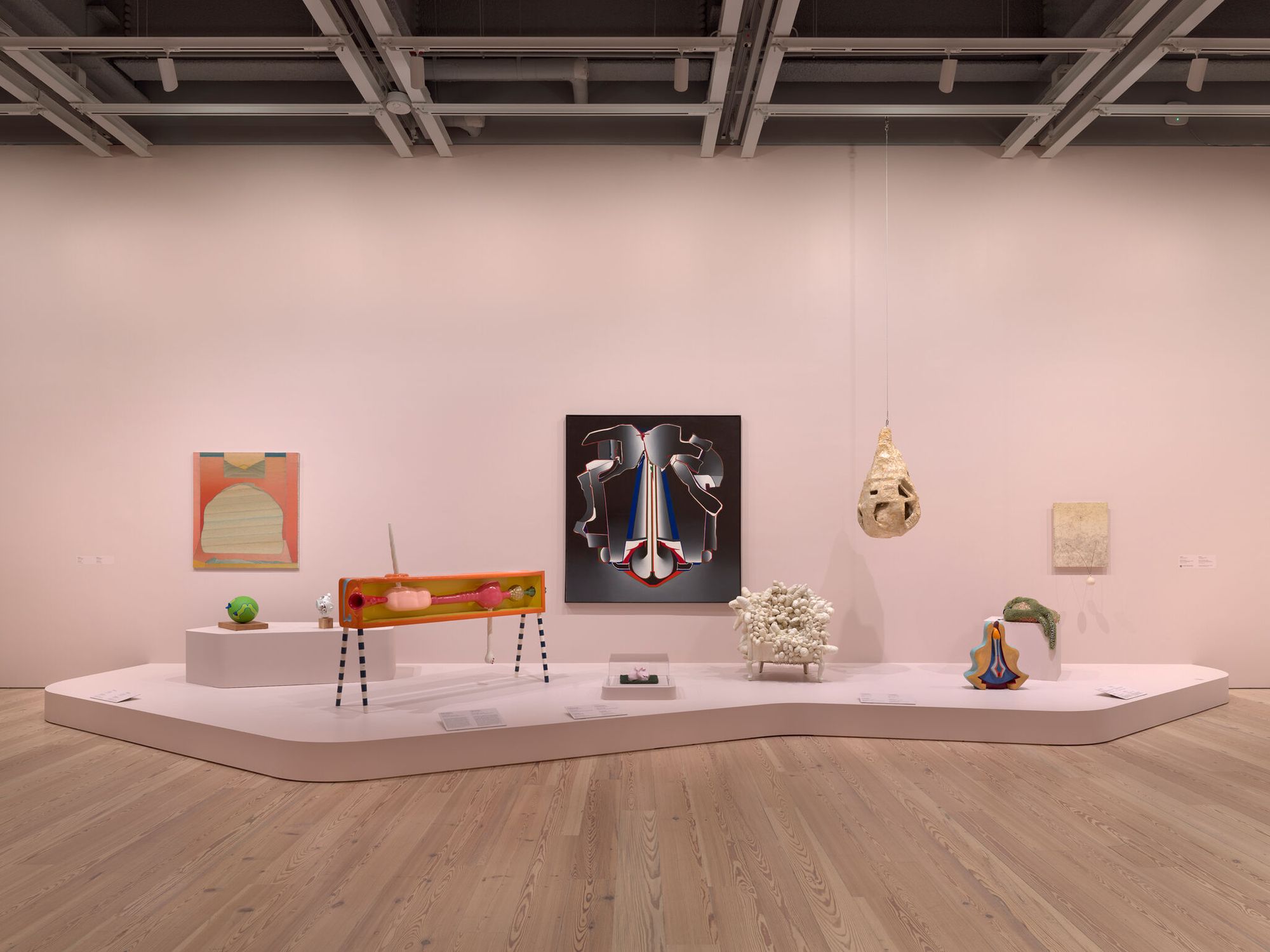
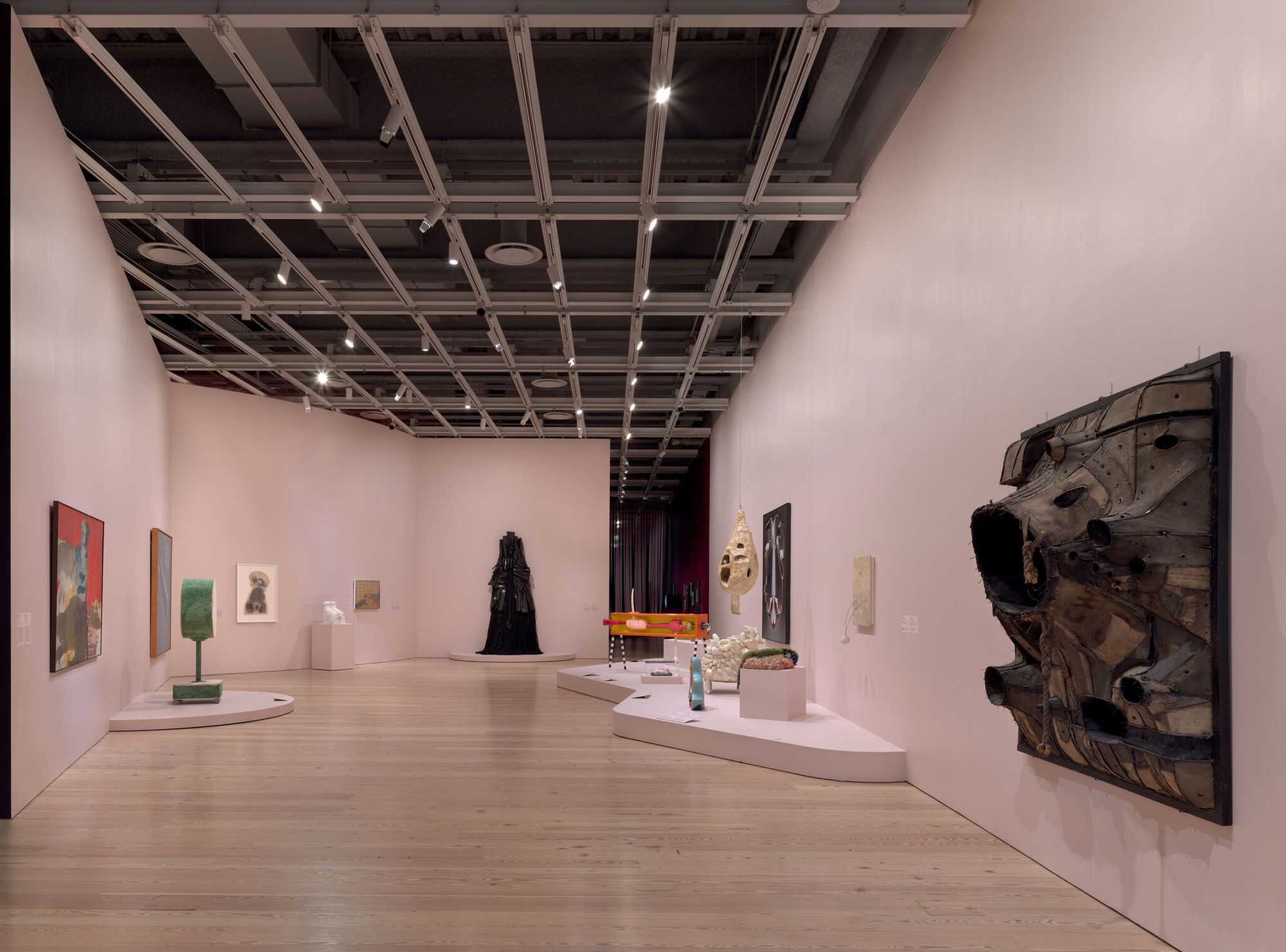
Installation view of Sixties Surreal (Whitney Museum of American Art, New York, September 24, 2025-January 19, 2026). From left to right: Miyoko Ito, Untitled, 1970; Kenneth Price, S.L. Green, 1963; Michael Todd, Fetish 3, 1963; Jeremy Anderson, Riverrun, 1965; Deborah Remington, Haddonfield, 1965; Hannah Wilke, Teasel Cushion, 1967; Yayoi Kusama, Accumulation, c. 1963; Louise Bourgeois, Fée Couturière, 1963; Judy Chicago, In My Mother’s House, c. 1962-64; Franklin Williams, Untitled, 1967; Eva Hesse, C-Clamp Blues, 1965. Artworks © Estate of Miyoko Ito; © Estate of Ken Price, courtesy Matthew Marks Gallery, New York; © Michael Todd; © Estate of Jeremy Anderson; © 2025 Deborah Remington Charitable Trust for the Visual Arts / Licensed by VAGA at Artists Rights Society (ARS), New York; © 2025 Marsie, Emanuelle, Damon and Andrew Scharlatt, Hannah Wilke Collection & Archive, Los Angeles / Artists Rights Society (ARS), NY; © YAYOI KUSAMA; © 2025 The Easton Foundation / Artists Rights Society (ARS), New York; © 2025 Judy Chicago / Artists Rights Society (ARS), New York; © Franklin Williams; © The Estate of Eva Hesse. Photograph by Ron Amstutz, digital image © Whitney Museum of American Art.

Sixties Surreal is an ambitious, scholarly reappraisal of American art from 1958 to 1972, encompassing the work of more than 100 artists. This revisionist survey looks beyond now canonical movements to focus instead on the era’s most fundamental, if underrecognized, aesthetic current—an efflorescence of psychosexual, fantastical, and revolutionary tendencies, undergirded by the imprint of historical Surrealism and its broad dissemination.

At the Whitney, Sixties Surreal attends to the ways in which historical Surrealism of the earlier 20th Century laid the groundwork for a kind of vernacular surrealism in the 1960s—particularly in America, as cascading social and political changes affirmed that life, itself, is surreal. The way in which artists working across the country—from New York and Philadelphia, to Chicago, Houston, Los Angeles, and the Bay Area—beheld and reimagined this reality will be among the exhibition’s central concerns, while also mirroring the sociopolitical extremes in which artists of the present find themselves working.