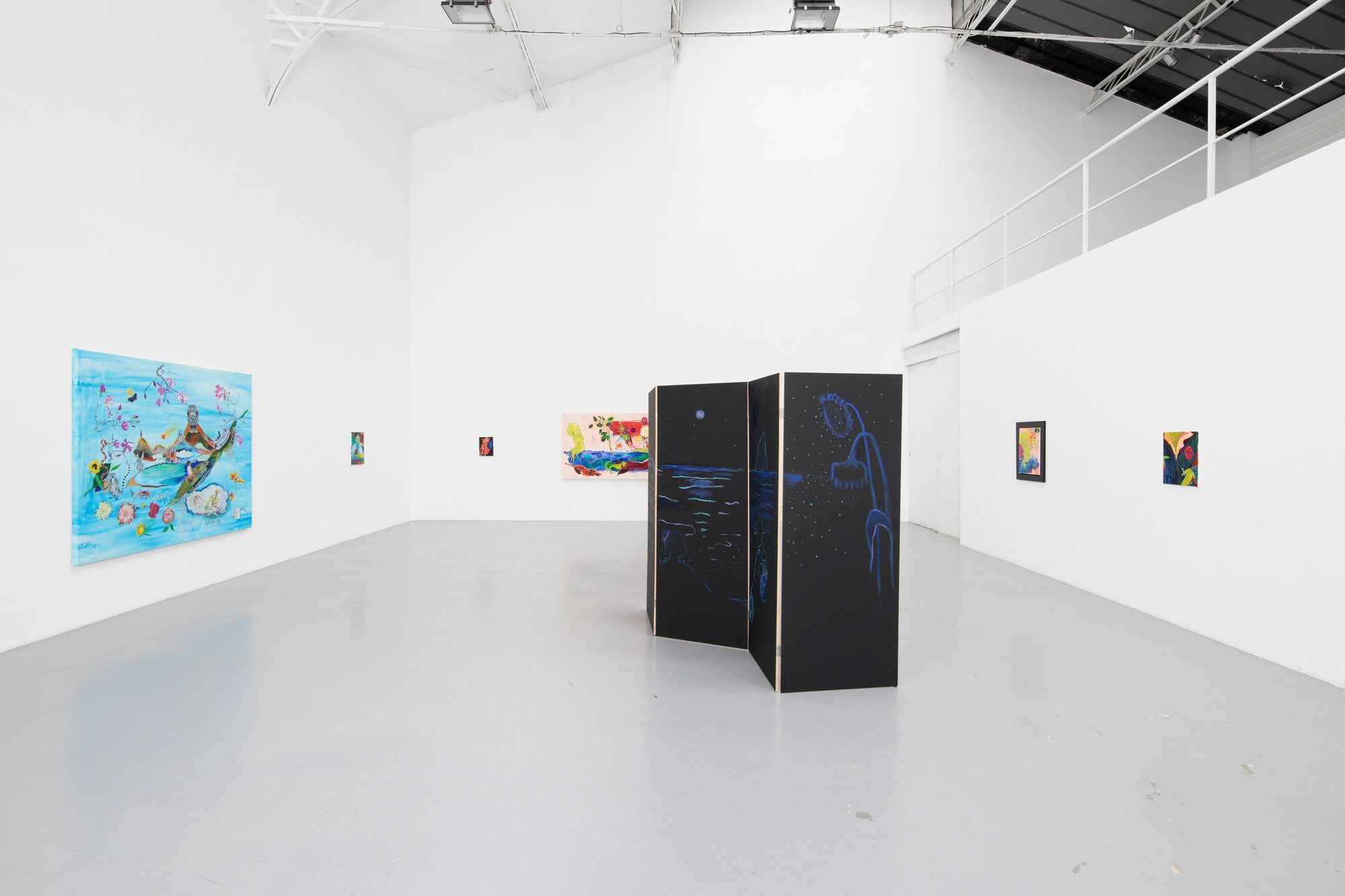
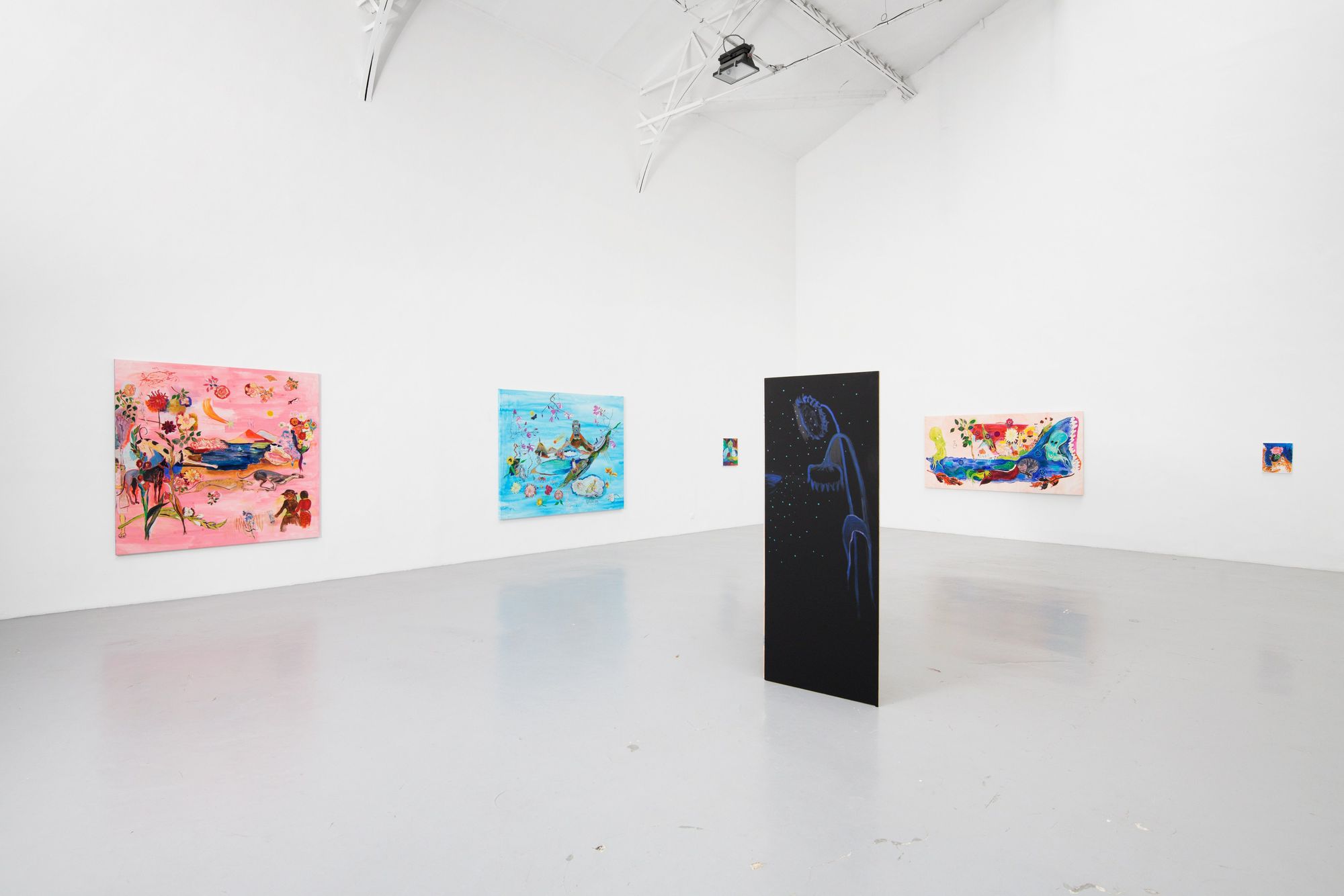
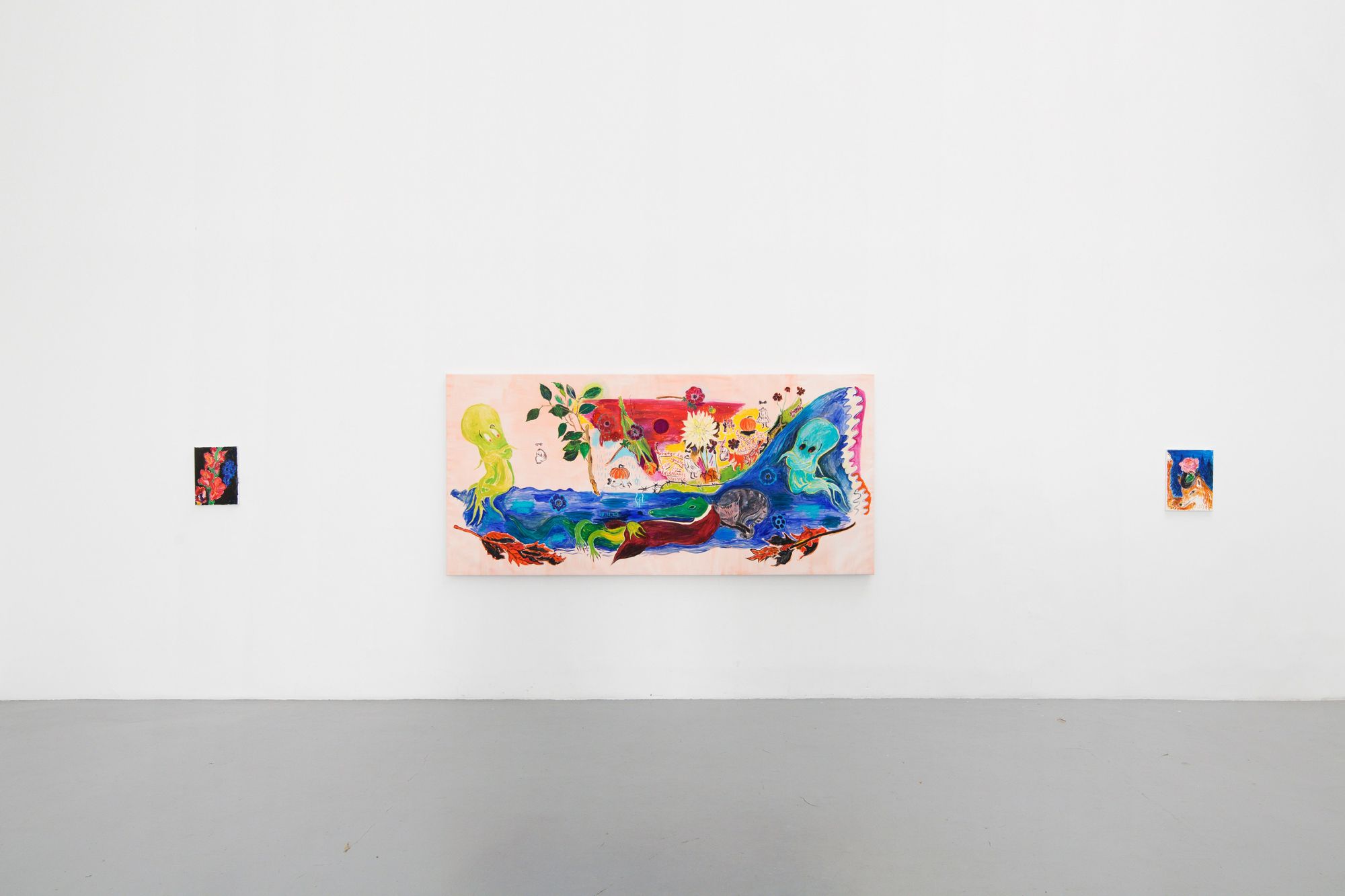
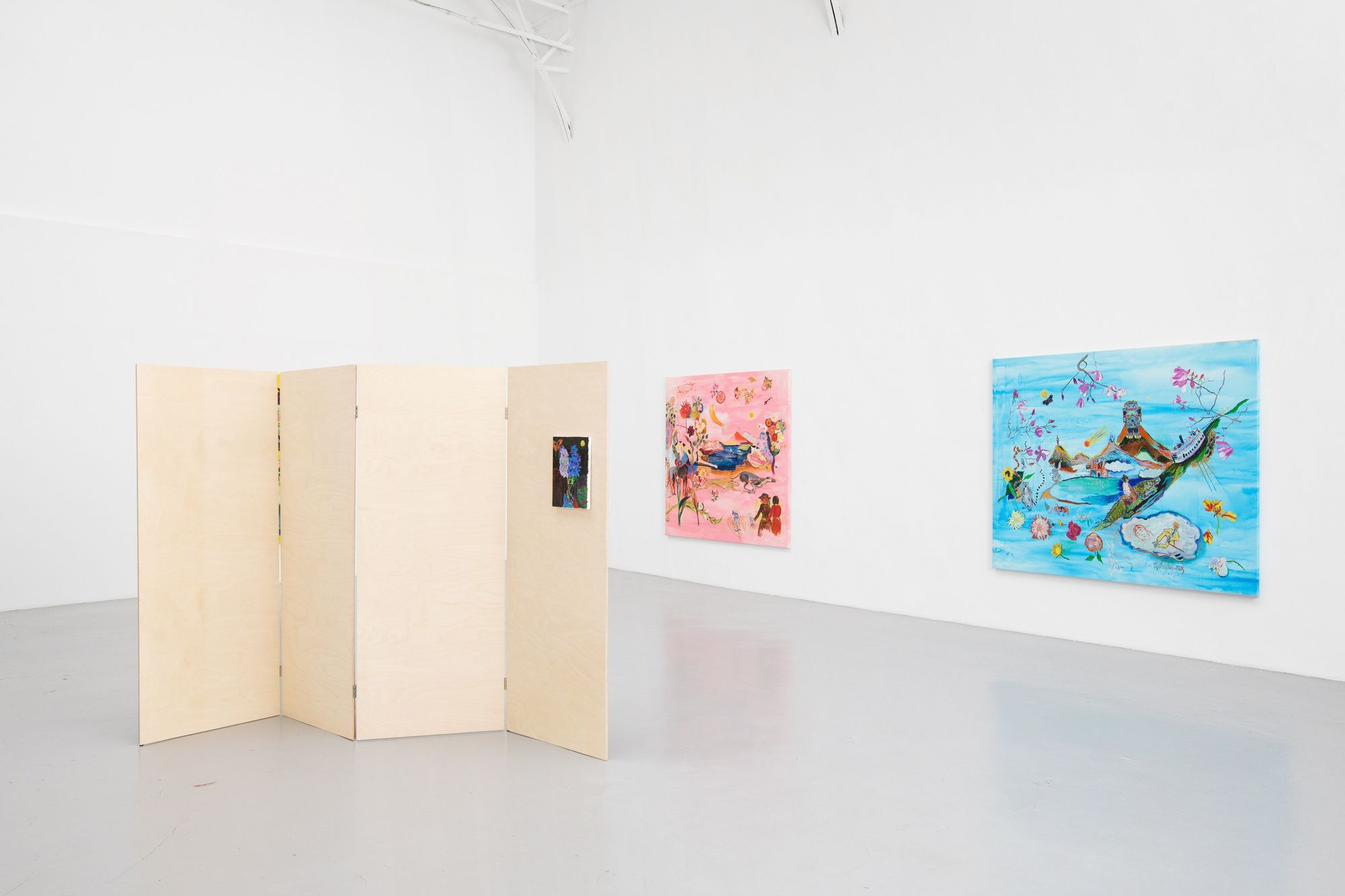
Flowers signal something excessive at the core of painting: an unspoken, almost violent desire to abandon all social responsibility in the full, sovereign enjoyment of its own powers, which are absent-minded and pathetic. In Emily Sundblad’s canvases, flowers escape the still life and levitate over landscapes, invade portraits. Beyond delightful, they overdose painting without regard for perspective or scale or visual reason. But the pathetic power of the flower is not just the garden’s desire to wildly outgrow its own boundaries. Composition itself becomes efflorescent in the way it takes over large-format canvases without any need for a large-format image or plan. Painting finds happiness in the discovery of its own manual eye, feeling its way from moment to moment, from color to color.
Un Violent Désir de Bonheur is a slogan seen on a banner at a recent protest against the raising of the retirement age in France. The human fight for happiness in the midst of the catastrophe of capitalism is another sort of pathetic flowering. And it was while painting in the studio that Sundblad heard Eileen Myles on the Apology podcast, explaining how the poet decided to start using the pronoun “they”: when Jesus asked an evil spirit who’d taken possession of a man’s body to identify itself, the reply was “I am Legion/For we are many.” So “they” might name desire’s inner army, demonic in their disregard for the property lines of the self. In Sundblad’s paintings, the fight for happiness is wildly inclusive of subject matter and any momentary impulse... dreams, costumes, writing, sentiments, animals, others, daily life. It’s in the multiplicity of motifs, as one scene happens upon the next and then colors begin to blaze and flower in excess of whatever information they bring. The paintings are “legion” and also dream-like in their spatial distortions and in the sprouting of one vignette from another, in their disorienting joy of displacement.
In the midst of catastrophe, desire moves quickly and with lightness of heart. A storybook octopus watches over invisible children in a Long Island pumpkin patch: it’s Halloween and there’s war and death in Gaza, and all of this information coincides with the act of painting. We encounter smoking alligators and foxes with hats. As the paintings open themselves to the simple pleasures of children’s book illustration, they also invoke a sort of cartoon opium den and a mother’s daydreams of normal and non-normal love, maybe getting drunk and fucking a tiger. Without the need to be right or strong about anything, painting enlists human sentiment in a tough and disorderly kind of kitsch that keeps pushing up funny, sick roses. Chaos is where these flowers come from, their compost and sun. We think of Berthe Morisot stealing moments of painting from the domestic clock. Or Paul Thek in Italy, painting divers and dinosaurs on newsprint, Balthus’s illustrations of Wuthering Heights, and Tove Jansson’s Moomins wandering into a Munch seascape. In Sundblad’s plein air seascapes, the wave is a sort of high-speed flower, a crash of colors gathered in swift, dedicated acts of painting (at the time of this writing, a dozen small seascapes are still lost in transit and maybe won’t show up in Paris).
- John Kelsey